
Top 7 Best Ways to Control LED Floodlight Glare at Commercial Sites
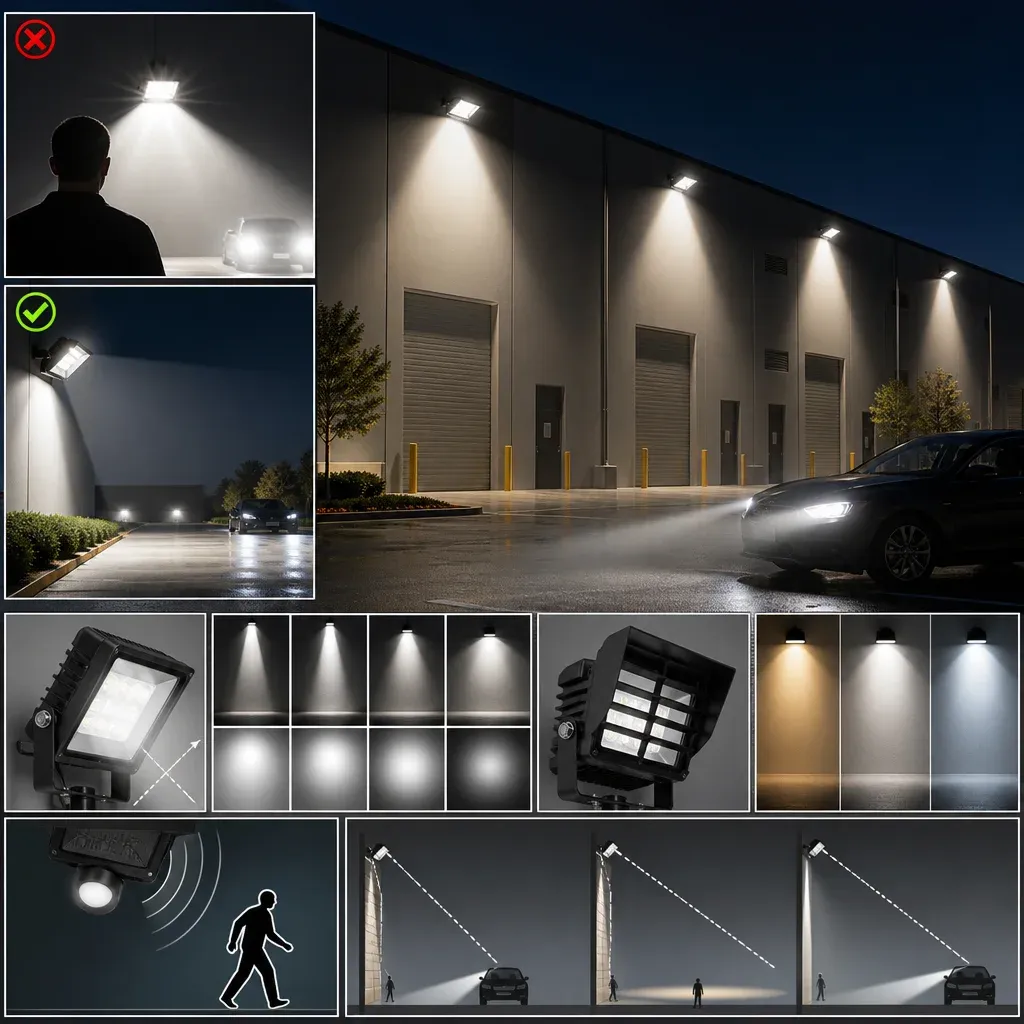
1. Angle Optimization for Reduced Light Spillage
LED floodlights are essential for securing and illuminating commercial properties, parking lots, warehouses, and building facades. Yet uncontrolled glare becomes a liability. It reduces visibility for drivers and pedestrians, creates safety hazards, disturbs nearby residents, and damages your brand's professional appearance. The challenge isn't brightness itself—it's directing that brightness where it belongs while eliminating unwanted spillage and harsh light scatter.
We've spent years helping Texas commercial property owners, general contractors, and facility managers solve this problem. The good news: controlling LED floodlight glare is achievable through strategic design choices and the right equipment. Below are seven proven methods we recommend, each addressing different aspects of glare management.
The angle at which your floodlight mounts directly determines how light scatters. A light tilted at the wrong angle creates a cone of illumination that extends far beyond your target area, spilling onto neighboring properties, streets, and adjacent rooftops.
Begin by identifying your actual illumination target. If you're lighting a loading dock, the light should focus downward and inward toward the dock platform, not upward or outward. Adjust your fixture angle so the primary beam direction aligns with this target zone. Most quality floodlights allow 0 to 45-degree tilt adjustments; use this range strategically.
Steep downward angles (30-45 degrees) work best for ground-level zones and reduce sky glow significantly. Shallower angles suit vertical surfaces like building walls or monument signs. Test different angles during nighttime site visits before finalizing installation. This single adjustment often cuts glare complaints by 60-70% without replacing any equipment.
Action item: Map your illumination zone on-site during daylight, then simulate nighttime angles with temporary lighting before permanent installation.
2. Proper Beam Pattern Selection and Positioning
Not all floodlights produce the same light distribution. Beam patterns vary widely: narrow spotlights concentrate light in tight zones, while wide-angle floods scatter light across broad areas. Mismatched beam patterns are one of the most common glare causes we see.
A narrow beam (15-30 degrees) excels for highlighting specific features like signage or architectural details. A medium beam (30-60 degrees) suits parking lot and perimeter security lighting. A wide beam (60-90 degrees) spreads light across large areas but demands careful positioning to prevent spillage.
Your beam pattern should match your coverage goal. Using a wide-beam fixture where a narrow beam would work forces you to aim lower or reduce brightness to minimize glare—both compromises. Select the tightest beam pattern that still achieves adequate coverage across your target zone. This focused approach concentrates lumens where needed and minimizes wasted light that creates glare.
Positioning matters equally. Position multiple smaller-angle fixtures rather than one large wide-angle fixture to maintain uniform illumination while controlling spillage. For parking lots, cluster fixtures along perimeter poles rather than centralized placement.
Action item: Measure your target coverage area (length, width, and depth), then request beam pattern specifications from your lighting supplier to match your geometry exactly.
3. Anti-Glare Louver Systems and Diffusers
Louvers are internal or external shading structures that block direct light rays from reaching the viewer's eye while allowing reflected light to provide illumination. Think of them as strategic shade that prevents glare while preserving function.
External louvers sit in front of the lens and physically block light rays at steep angles. They're particularly effective for fixtures mounted at eye level or aimed toward viewing areas. Internal louvers sit within the fixture housing and work similarly, offering a cleaner aesthetic while reducing glare at moderate angles.
Diffusers scatter light more evenly, softening harsh bright spots. They reduce peak brightness in the center of the beam cone, making the light feel less intense to observers. Polycarbonate diffuser lenses are durable and widely available; they work especially well for fixtures positioned near roadways or adjacent properties.
We find louver-equipped fixtures reduce glare perception by 40-50% compared to standard bare lenses. They're an affordable upgrade during initial purchase or retrofit installation. Many commercial-grade LED floodlights we offer include integrated louver systems as standard, eliminating the need for aftermarket additions.
Action item: If your existing fixtures cause complaints, request louver retrofit kits or plan a phased replacement with louver-equipped models as part of your next maintenance cycle.
4. Color Temperature Adjustment Strategies
Color temperature—measured in Kelvin (K)—influences how harshly light is perceived. Cooler light (5000K-6500K) appears brighter and more intense, amplifying glare perception. Warmer light (2700K-3000K) feels softer and less glaring, even at the same brightness level.
Daylight color (4000K-5000K) is standard for security and general illumination because it mimics natural daylight and supports visibility. However, if glare complaints persist in sensitive areas—near residential zones or hospital facilities—shifting to 3500K or 3000K warm white can reduce perceived glare without sacrificing function.
This strategy doesn't reduce actual light output; it changes how the eye perceives intensity. Warm white light scatters less noticeably and feels less jarring to nearby observers. We typically recommend 4000K as a compromise: it maintains security visibility standards while reducing the harsh glare feeling of cooler temperatures.
Another option: use warm-white fixtures for aesthetic perimeter lighting and accent lighting, while keeping cooler 5000K illumination for functional security zones. This layered approach maintains security effectiveness while softening the overall nighttime appearance.
Action item: Request color temperature samples from your supplier and evaluate multiple options at your site during evening hours before committing to a full installation.
5. Motion-Activated and Dimming Technology Integration
Why run floodlights at full brightness all night if motion-activated control can reduce runtime and eliminate unnecessary glare during low-traffic periods? Modern LED systems support both motion sensors and dimming controls that cut energy use while managing glare intelligently.
Motion sensors detect activity within a zone and trigger full illumination only when needed. During quiet periods, lights remain off or dim to minimal levels, eliminating glare entirely. For loading docks and perimeter security, motion activation reduces glare complaints from adjacent properties while maintaining responsive security lighting.
Dimming systems allow remote or automated brightness adjustment based on time of night or ambient conditions. Early evening security lighting might run at 80% brightness; after midnight, reduce to 40% when fewer people occupy the area. This graduated approach maintains visibility while cutting peak glare during late-night hours when nearby residents are most sensitive.
Smart controls via smartphone apps or building automation systems give you real-time glare management. If a complaint arrives, you can lower brightness or adjust timing remotely without site visits. This flexibility is impossible with traditional fixed-output floodlights.
Action item: Consult with your LED supplier about control-ready fixtures that support motion sensors and dimming modules, ensuring compatibility before purchase.
6. Strategic Light Placement and Mounting Height
Mounting height and horizontal placement dramatically influence glare distribution. Light placed too high or too far from the target zone creates excessive sky glow and spillage. Light positioned too low can glare directly into observers' eyes.
The optimal mounting height depends on your target zone and beam angle. For a parking lot, mounting 20-25 feet high with a 45-50 degree downward angle typically minimizes glare while achieving even coverage. For a building facade, mounting at 30-40 feet with narrow-angle beams concentrates light on architectural features while preventing spillage onto adjacent structures.
Distance from the target also matters. A floodlight mounted far from its target requires higher brightness to achieve equivalent illumination, increasing glare proportionally. Positioning fixtures closer to target zones allows lower wattage, reducing glare immediately.
Consider vertical mounting on walls or poles near the illumination target rather than distant perimeter placement. This proximity approach concentrates light efficiently and minimizes stray rays. For warehouse and industrial sites, this often means mounting fixtures on the structure itself rather than on distant pole arrays.
Action item: Create a scaled site diagram showing existing and proposed fixture positions, then calculate beam coverage with your lighting partner to validate placement before installation.
7. Quality LED Fixtures with Built-In Glare Control
Not all commercial LED floodlights are engineered equally. Budget fixtures prioritize low cost over optical design, resulting in poor beam control and inherent glare issues. Premium LED floodlights integrate multiple glare-reduction features into their optical design from the start.
High-quality fixtures include precision reflectors that direct light exactly where intended, minimizing spillage. They feature integrated louvers or diffuser lenses that suppress harsh brightness peaks. Many incorporate asymmetrical beam patterns that illuminate rectangular target zones efficiently rather than wasteful circular patterns.
When we design commercial lighting solutions for our clients, we specify fixtures with proven glare-reduction engineering. Our LED floodlight inventory emphasizes optical precision and durability. Industrial-grade models come with reinforced housing, corrosion-resistant materials, and photometric data that documents beam distribution and glare prevention.
Investing in quality fixtures from the beginning costs more upfront but eliminates the hidden expense of retrofits, adjustments, and glare-related complaints. You get correct performance on day one rather than troubleshooting problems for months afterward.
Action item: Request detailed photometric reports and beam pattern diagrams from suppliers; avoid fixtures without published optical specifications, as this typically indicates compromised design.
8. Regular Maintenance and Lens Cleaning Protocols
Dust, dirt, and environmental residue accumulate on lens surfaces, scattering light inefficiently and amplifying glare perception. A dirty lens transmits light unevenly, creating bright spots and halos that feel more glaring than clean lens output.
Establish a quarterly lens cleaning schedule for high-glare-sensitivity areas (near residential zones or busy roads). Use a soft, non-abrasive cloth with mild soap and water. Avoid harsh chemicals or rough scrubbing, which damages lens coatings. In coastal or dusty environments, increase cleaning frequency to monthly intervals.
Clean lenses transmit 10-15% more light directionally compared to dirt-covered lenses scattering the same light output inefficiently. This improvement directly reduces perceived glare by directing light where intended rather than allowing it to scatter.
Inspect fixture housings for cracks or optical degradation. Replace damaged lenses immediately; compromised optics cannot be repaired and will continue contributing to glare problems indefinitely.
Action item: Document your maintenance calendar, assign responsibility for quarterly inspections, and maintain a cleaning log to track compliance and verify performance improvements.
9. Professional Site Assessment and Custom Design
Every commercial property presents unique glare challenges based on proximity to residences, traffic patterns, architectural features, and existing infrastructure. A one-size-fits-all approach often fails because it ignores these site-specific factors.
We provide commercial lighting assessments that analyze your site's lighting needs, identify glare risk zones, and recommend fixture specifications tailored to your property. Our assessment includes photometric modeling, which simulates how light distributes before installation begins.
Professional assessment prevents costly mistakes. We identify problem areas you might miss, specify appropriate fixture types and mounting locations, and validate beam patterns against your coverage requirements. This proactive approach eliminates guesswork and ensures your lighting system performs correctly from installation day forward.
A custom design also documents your lighting decisions, creating a reference for maintenance teams and future modifications. It protects you legally by demonstrating that your lighting system was professionally engineered to minimize glare and environmental impact.
Action item: Schedule a professional site assessment for any commercial property experiencing glare complaints or planning new illumination; the assessment cost typically pays for itself through improved design and eliminated retrofit expenses.
Controlling LED floodlight glare requires a combination of strategic choices: angle optimization, beam pattern selection, quality fixtures with integrated glare control, louver systems, color temperature adjustment, motion-activated controls, smart placement, regular maintenance, and professional design guidance. Each method addresses different aspects of the glare problem.
At LED Depot TX, we approach every commercial lighting project as an opportunity to deliver both function and restraint. Our team specifies fixtures, mounting strategies, and control systems that illuminate effectively while respecting neighboring properties and maintaining community relations. When you partner with us for your commercial LED floodlight installation, you're investing in solutions engineered to perform correctly from day one, without the trial-and-error adjustments that create complaints and costs.
If your current lighting system creates glare issues or you're planning a new commercial illumination project, reach out for a professional assessment. We'll deliver specifications and recommendations that turn your site into a well-lit, community-friendly asset.
Planning a project like this? Call LED Depot TX at (866) 840-6263 or request a free quote.
